Health & Fitness
Con Ed Delivers What New Yorkers Crave: Fiscal Abuse
New Yorkers' tough-talking image is just a façade. Their utility bills reveal a seemingly insatiable appetite for financial pain.

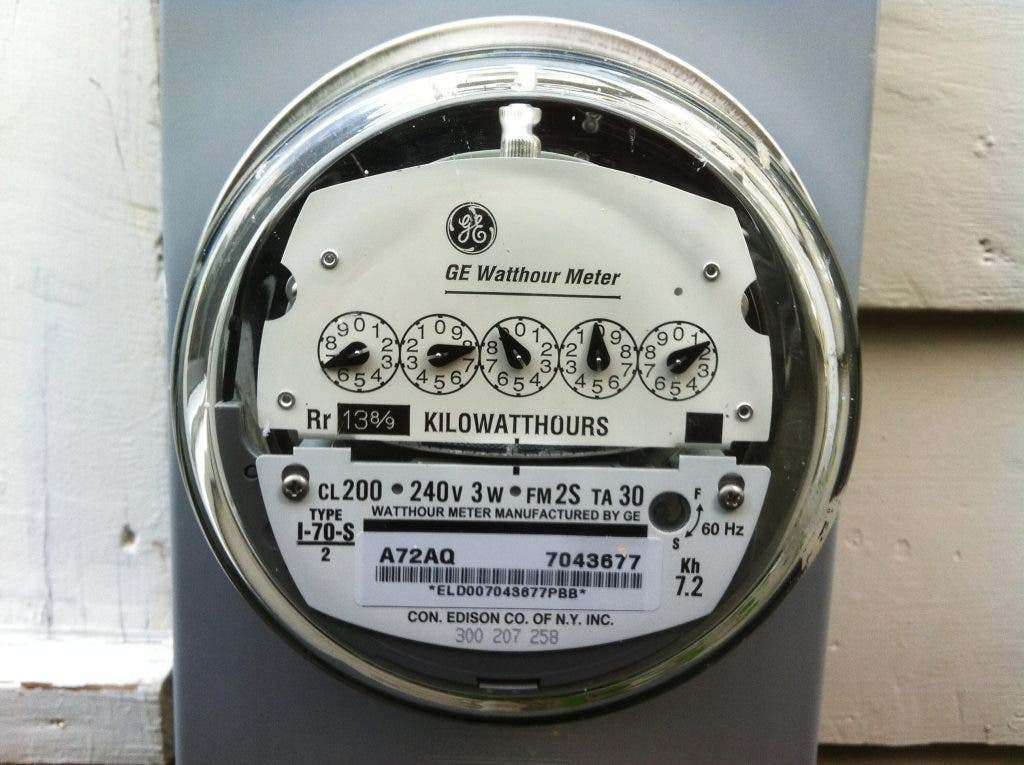
New Yorkers revel in their image as sharp-elbowed cynics who take nuthin’ from nobody. This, however, is a façade; behind their carefully locked doors, they cheerfully endure endless financial abuse.
You already know about Manhattan apartments that are glorified broom closets, and parking spaces that cost as much as some people’s monthly rent, but I’m not talking about these things. Nor am I talking about suburban homeowners who face property taxes that would amount to a decent yearly income in most of the country. Nor do I refer to private-school kindergartens that cost as much as an Ivy League college.
I am talking about something much more basic: the price of keeping the lights on and the furnace running. Thanks to their bloated behemoth of a utility, Consolidated Edison, residents of the five boroughs and adjacent northern suburbs pay staggeringly high prices for electricity and natural gas. Con Ed likes to blame taxes and labor costs, but this is a red herring. Con Ed’s rates are themselves a tax on New Yorkers – a steep tax that drives businesses and jobs elsewhere.
Find out what's happening in Scarsdalewith free, real-time updates from Patch.
This isn’t a secret. New Yorkers know they pay high prices, and that those prices are marching steadily higher even as most parts of the country benefit from stabilizing utility costs. Yet I think many Con Ed customers would be astonished to learn exactly how much they pay compared to people who live in other places. So my colleague Amy Laburda and I gathered some bills and took a close look.
First, some basics. Any utility bill has various components. There is the cost of fuel, such as natural gas, which some customers burn in their furnaces and kitchen stoves but which also might be used (along with other fuels or power sources such as water, wind and solar) to generate electricity. There is the cost of the generating equipment. There is the cost of the transmission lines, pipelines and other infrastructure that delivers the utilities to your home or business. There are taxes, and there is corporate overhead, covering everything from paper and postage for monthly statements to executive salaries and shareholder dividends.
Find out what's happening in Scarsdalewith free, real-time updates from Patch.
In my comparison, I left out taxes that are added to the cost of the electricity or gas, and I tried to separate the prices that Con Ed and its peers charge for obtaining or producing the gas and electricity from the prices for delivering it.
Although the mix of power sources – thus the cost of power – will vary regionally, the cost of delivering that power generally ought to be a function of the distance from those power sources and the density of the customers in the delivery area. In the Northeast, power is generally produced close to the consumers who use it, and it goes mostly to multi-family homes or to densely populated cities and suburbs. Most of the New York City area’s electricity is generated locally from a mix of oil-, gas- and nuclear-fueled generators.
Power delivery charges ought to be cheaper in a densely populated suburb than, for example, in rural Vermont. Or, for that matter, cheaper than in south Florida, where power is carried over longer distances to fewer customers, through wires that are more often damaged by hurricanes and lightning storms.
The electricity bills I gathered tell a different story.
To deliver power to a condominium in Fort Lauderdale or to a home in central Florida’s semi-rural Flagler County, Florida Power & Light charges about 5.2 cents per kilowatt-hour (kWh) for the first 1,000 kWh each month; additional usage costs 6.2 cents per kWh. The charge for generating that power is 3.3 cents per kWh for the first 1,000, and 4.3 cents thereafter. Thus, the total charge ranges from 8.5 cents to 10.5 cents per kWh.
Company Cost of Power (per kWh) Delivery & other (per kWh) Total cost (per kWh) Florida Power and Light Company (first 1000 kWh) $0.03343 $0.05184 $0.08527 Florida Power and Light Company (beyond first 1000 kWh) $0.04343 $0.06184 $0.10527 Con Edison/Gateway Energy Services $0.11990 $0.11978 $0.23968 Central Vermont Public Service $0.14615 $0.00986 $0.15601At my home in Westchester County, Con Ed charges nearly 12 cents per kWh just to deliver the power. I don’t buy my electricity from Con Ed. I purchase it from another vendor, Gateway Energy, which charges 11.99 cents per kWh, which is about a penny less than Con Ed. Even with this modest savings, my total electric cost in Westchester is nearly 24 cents per kWh, around 2.5 times what I would pay in Florida for the same amount of power. This is before taxes are added.
There are certain regional differences to take into account. The Northeast and the Southeast have different energy constraints. Let us consider Vermont, then. A rural area like Quechee, Vt., should be at a disadvantage when competing with an area just five miles north of New York City. Nevertheless, Central Vermont Public Service charges a combined supply and delivery rate of 14.615 cents per kWh. A few other minor charges bring the total to about 15.6 cents, which is still some 40 percent below Con Ed’s rates.
Natural gas prices have plunged this year. This should be good news for consumers’ electric bills, since much of the Northeast’s power is generated from gas, as well as for consumers who heat their houses with gas. But thanks to Con Ed’s rate structure, its customers do not receive nearly as much benefit that they should.
New York regulators allow Con Ed to make all of its electricity profit from the delivery part of the business; it just passes along its costs for generation. The company therefore has less incentive to drive down generating costs by taking advantage of cheaper gas. It need not even care whether I buy my electricity from Con Ed or Gateway; Con Ed makes the same profit either way.
I use natural gas to heat my Westchester home, and the story is similar to the electricity bills described above. I paid Gateway $0.799015 per therm for natural gas this winter, and ConEd $0.870192 per therm (beyond the first 3.2, which are included in a basic service charge) to deliver the gas to my house. In a comparable setting, North Shore Gas – which provides natural gas to suburbs north of Chicago – charged $0.3745 per therm for gas, with a delivery cost of $0.17791 per therm for the first 50 and $0.05881 per therm after that. Customers in suburban Chicago with homes similar to mine pay only about one-third what I pay for heating and cooking.
Con Ed likes to invoke a mantra that, under some obscure law of the cosmos, costs are higher in New York. It made this claim a few years ago when it blamed higher taxes. But my comparisons do not include taxes imposed directly on consumers. In any event, costs of fuel and equipment are basically the same everywhere.
One particularly high cost Con Ed incurs is lobbying. As a monopoly (on power delivery if not supply), Con Ed must get approval of its rates from the New York Public Service Commission, a body which regulates utilities in the state of New York. To say that New York’s PSC does a poor job of forcing Con Ed to deliver value along with its electricity and gas is an understatement. In 2010, the Commission approved yearly rate increases for three years, condemning the state’s consumers to even greater abuse despite the recent favorable developments in the gas market.
Con Ed is a drain on the region’s households and a drag on its economy. It is not an innocent victim of New York’s high costs, as it likes to claim; it is a chief contributor to those high costs and a major incentive for businesses and householders to set up shop elsewhere.
But after all, a utility is in the business of satisfying customer demands. And though they don’t like to admit it in public, New Yorkers seem to have an affinity for financial pain.
For more articles on financial, business, and other topics, view the Palisades Hudson newsletter, Sentinel, or subscribe to my daily opinion column, Current Commentary.